
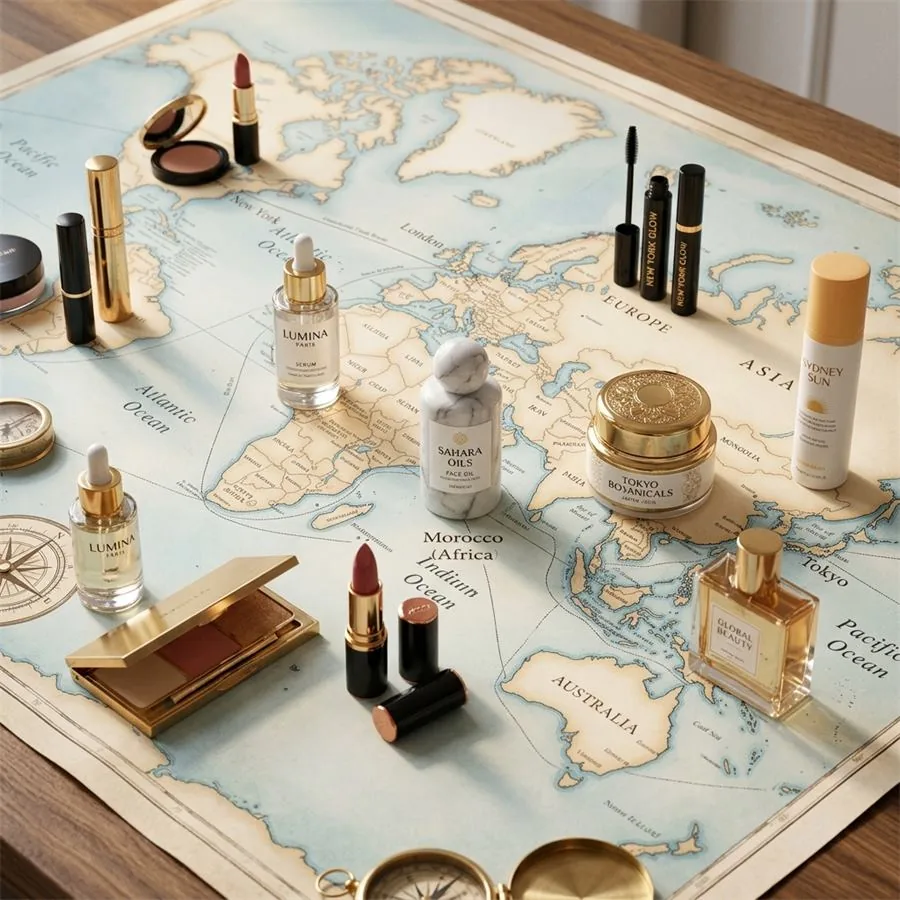
Running a product marketing function for an international brand means operating with a paradox baked into your job description. On one side, your leadership team expects consistent, high-quality brand imagery across every market where you operate. On the other side, your content budget is finite, your agency relationships are slow, and your marketing calendar is littered with simultaneous launches across time zones and languages. The traditional production model was built for a world where markets could be serviced sequentially. Today's market is not that world.
AI photography has emerged as the production infrastructure that makes truly simultaneous, locally relevant, multi-market content a practical reality — not a budget line item for next fiscal year. This article examines the specific challenges global brand teams face with product photography, and how AI is solving them at each stage of the content lifecycle.
AI product photography
Want a practical recommendation for your product?
Share the product, sales channel, deliverables, and timing. Pixelense will recommend the clearest scope without changing the published starting rates.
The Core Problem: Localising Product Photography Across Markets
The problem with global product photography starts with a fundamental assumption embedded in most brand content workflows: that a single set of imagery can work everywhere. It can't — or at least, not without sacrificing significant performance.
Visual preferences differ meaningfully across markets. What reads as premium in the United States (bright, aspirational, spatially generous, often outdoors) can read as cold or impersonal in parts of Asia. What works for a German consumer (clean, technically detailed, understated) may feel sterile to a Brazilian audience. The lifestyle contexts embedded in images — the kitchen style, the outdoor environment, the urban setting — communicate cultural fluency or the lack of it with immediate visual force.
The traditional solution is to run separate photoshoots in key markets — US, EU, APAC — with local stylists, local models, and local environmental contexts. For a brand with genuine scale, this approach costs millions of dollars annually and requires a global network of photography production relationships to manage.
The less satisfying but more common solution is to produce imagery in one market (usually the US or the UK) and push it globally, accepting that it will underperform in markets where it doesn't culturally resonate. This approach leaves significant revenue on the table.
AI photography offers a third path: produce locally relevant imagery for every market, from the same product reference images, at a fraction of the cost of market-specific shoots.
Market-Specific Visual Preferences: A Brief Breakdown
For brand managers building a global AI photography strategy, understanding the broad visual preferences of different market clusters is the starting point:
- North America (US and Canada): Aspirational, spacious lifestyle settings. Diverse model representation has become table stakes rather than a differentiator. Bright, high-energy imagery tends to outperform in social commerce. Direct benefit communication (infographic callouts on product images) is well-received.
- Western Europe (UK, France, Germany, the Netherlands): More restrained visual language. Clean, intentional compositions with less aggressive brightness. Northern European markets (DE, NL, Scandinavia) particularly value technical detail and materials information in imagery. British audiences respond to understated wit and heritage cues where relevant.
- Southern Europe (Spain, Italy, France): Lifestyle imagery skews warm, social, and sensory. Outdoor dining, Mediterranean light, and relaxed-but-curated styling resonate strongly. Colour palettes tend to be warmer than Northern European equivalents.
- East Asia (Japan, South Korea, China): Precision, cleanliness, and detail are primary signals. Japanese market imagery in particular rewards minimalism and craft visibility. Korean market content benefits from softer skin-tone representation and detail-focused product shots. Chinese market preferences have shifted rapidly toward short-form video, with still imagery playing a supporting rather than primary role in some categories.
- Southeast Asia and South Asia: Emerging middle-class aspirational imagery. Lifestyle settings that communicate attainment and modernity perform strongly. Localised skin-tone representation in beauty and personal care categories is particularly important.
- Middle East: Luxury and premium aesthetics perform strongly. Culturally appropriate model representation varies by platform and product category. Gold and jewel tones in backgrounds and props resonate in many product categories.
Generating Market-Specific Lifestyle Imagery from the Same Product Shot
The practical workflow that makes AI photography transformative for global brands is this: you provide a set of high-quality reference images of your product — or even existing studio images from your last traditional shoot — and specify the market contexts you need. Pixelense produces market-appropriate lifestyle variants from those references.
Concretely, this means a single vacuum cleaner reference image can generate:
- A bright, spacious open-plan American living room variant for Amazon.com and the brand's US website
- A compact, design-forward European apartment variant for the brand's .de and .fr markets
- A minimalist, tatami-influenced interior variant for the Japanese market website
- A warm, family-home context variant for Southeast Asian markets
Each variant carries the same product, photographed to the same technical standard, placed in a context that communicates cultural relevance in that specific market. The production cost per variant is a small fraction of what a separate local photoshoot would cost.
Content Velocity at Scale: What AI Photography Changes for Brand Teams
For marketing managers, content velocity — the rate at which you can produce and deploy new visual content — is a direct competitive advantage. Brands that can refresh their imagery more frequently, respond to seasonal trends faster, and test more creative variations are measurably more effective at capturing market share in social commerce environments.
Traditional photography workflows are throttled by physical production constraints. A studio shoot requires advance booking (2–6 weeks for quality partners), product logistics (shipping to and from the studio), and post-production timelines (7–21 days for edited deliverables). Run the numbers for a 200-SKU catalogue needing quarterly refreshes in five markets, and the production calendar becomes physically impossible with traditional methods.
AI photography removes the physical production constraints. There are no booking schedules, no product shipping logistics, no studio availability conflicts. A catalogue update brief submitted on Monday can deliver production-ready assets by Wednesday. A reactive piece of content responding to a trend identified on Friday can be live by the following Monday.
For brand teams managing global product launches, this speed difference changes what's possible. A simultaneous five-market launch — with locally optimised imagery in each market — shifts from a logistical achievement requiring months of coordination to a routine content production task.
Case Study Structure: A Five-Market Simultaneous Launch with AI
To make the process concrete, here is a representative workflow for a brand launching a new product line simultaneously across the US, UK, Germany, France, and Japan:
- Week 1 — Brief and reference: The brand's marketing team submits product reference images (or existing studio photography) along with a market-by-market brief describing the lifestyle contexts, model representation preferences, and key brand messages for each market. Brand guidelines and colour palettes are included.
- Week 1–2 — Production: Pixelense produces the core image stack for each market variant — hero shots, lifestyle scenes, infographic callouts, and any A+ Content or digital advertising formats required. Creative review rounds happen against a shared review link, with feedback incorporated in real time.
- Week 2 — Delivery: All five market image sets are delivered as named, sized, formatted files — ready for direct upload to each market's website, Amazon marketplace, social channels, and paid media platforms.
- Launch day: All five markets go live simultaneously, each with locally relevant visual content. No market is compromised by production logistics.
This timeline — two weeks from brief to global launch-ready assets — is not achievable with traditional photography under any normal production model. It is routine with an AI photography workflow.
Working with a Remote AI Studio: How Pixelense Operates as a Global Partner
For global brand teams, the question of how to work effectively with a remote AI photography studio is practical. Pixelense operates asynchronously — which means time zone differences don't create the production delays that traditional studios face. Briefs submitted from Los Angeles, London, or Singapore all enter the same production workflow and receive the same turnaround commitment.
Our intake process is designed for brand marketing teams managing complex projects. We work from structured briefs, support iterative creative review, and maintain version-controlled delivery so your internal stakeholders can review and approve before final files are released. We can integrate into existing project management tools and work within brand approval workflows that involve multiple internal reviewers.
For brands with existing agency relationships, Pixelense works as a production partner — supplying high-volume, technically precise product imagery that your creative agency then uses in campaign assembly. We are a production infrastructure layer, not a competing creative agency.
To discuss a global photography project, visit our contact page. To understand the full range of what we produce, explore our services or browse our portfolio of international brand work. You may also find our post on AI photography vs. traditional studio useful for building an internal business case.