
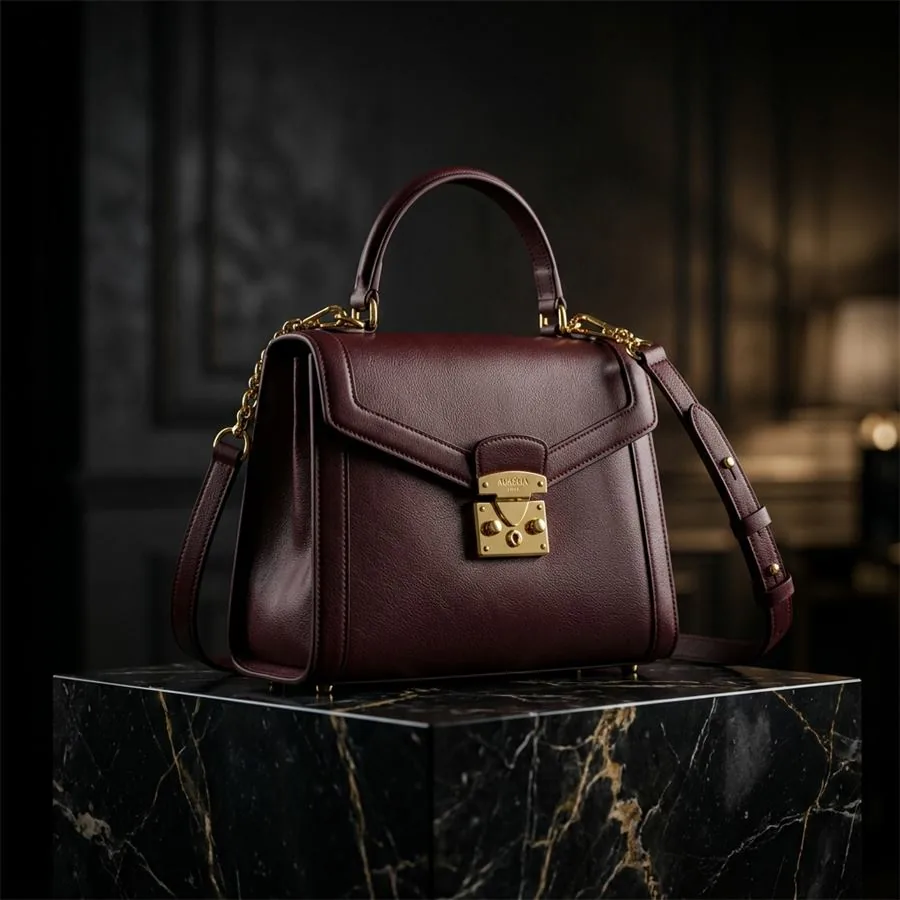
Luxury is, in large part, a visual language. The dark, directional lighting of a fragrance campaign. The cool expanse of Carrara marble beneath a jewellery piece. The precise, almost architectural composition of a leather goods flat lay. These are not incidental stylistic choices — they are the vocabulary through which premium brands communicate that their products exist in a different category to everything else on the market.
The challenge that luxury brand managers and creative directors have long faced is maintaining that exacting visual standard across a growing catalogue, at the pace of modern retail, without the costs scaling in lockstep with ambition. A single-day luxury photo shoot in Paris or Milan can cost $30,000—$80,000 when you include art direction, set design, talent, post-production, and logistics. For a brand launching four seasonal collections per year across 120 SKUs, traditional photography creates an impossible equation.
Fashion product photography
Want a practical recommendation for your product?
Share the product, sales channel, deliverables, and timing. Pixelense will recommend the clearest scope without changing the published starting rates.
Generative AI photography has changed that equation — but only when applied with the craft and intentionality that luxury demands. This article examines how premium brands are adopting AI photography without compromising the visual standards their customers expect.
The Visual Standards Luxury Brands Cannot Compromise
Before discussing AI's capabilities, it's worth being precise about what luxury photography actually requires — because the demands are more specific than most AI photography discussions acknowledge.
- Lighting precision: Luxury photography typically uses directional, controlled light with deep shadow gradients. The goal is to reveal the product's three-dimensionality and material quality — the sheen of satin, the patina of leather, the weight of precious metal — in a way that flat, high-key lighting cannot.
- Surface and context curation: The surface the product rests on is as deliberate as the product itself. Veined marble, aged oak, polished obsidian, raw silk — each communicates a specific register of luxury. The wrong surface choice undermines the product's positioning instantly.
- Colour accuracy: For luxury goods, colour fidelity is non-negotiable. A handbag photographed with even a slight warm or cool shift compared to its true colour creates customer expectation mismatches that damage brand trust.
- Negative space and composition: Luxury imagery typically uses more negative space than mass-market product photography. The emptiness around the product is itself a signal — it communicates that the brand is not competing for attention, but commanding it.
- Retouching standards: Every reflection, every shadow, every highlight must be intentional. Luxury photography undergoes far more intensive post-production than standard commercial photography.
All of these requirements are achievable with AI photography — but they require a skilled team that understands luxury aesthetics, not just a generative AI tool running on autopilot.
What AI Can Achieve for Luxury Visual Production
Modern generative AI systems, when guided by experienced creative directors, can produce imagery that meets luxury visual standards across the following applications:
Studio lighting reconstruction: AI can reproduce the look of directional rim lighting, split lighting, and low-key butterfly lighting with a high degree of realism. For products where the lighting is the hero — fragrance bottles, jewellery, watches — this capability is particularly powerful.
Surface and environment generation: Marble, onyx, brushed steel, lacquered wood, woven linen — AI can place products into surface contexts that would cost thousands of dollars to construct physically. Seasonal set changes (a winter campaign with frost-dusted botanicals; a summer campaign with bleached linen and Mediterranean light) that previously required physical set builds can now be produced from the same product reference imagery.
Lifestyle and editorial contexts: For aspirational lifestyle imagery — a watch on a yacht deck, a perfume bottle on a dressing table in a Haussmann apartment, a leather bag resting on a hotel concierge desk — AI photography can generate credible, high-resolution contexts from a product reference image alone.
Consistent brand colour grading: AI pipelines can be trained to output images with a consistent colour temperature, contrast curve, and saturation profile — the visual equivalent of a branded colour palette for photography. This is one of the most significant advantages of AI for luxury brands managing large catalogues: every image looks like it was shot on the same day, by the same photographer, in the same studio.
Brand Consistency Across Hundreds of SKUs
For luxury brands that operate at scale — fashion houses with seasonal ready-to-wear lines, cosmetics brands with dozens of shade variants, home goods labels with extensive collections — the problem of visual consistency is acute. When images are produced across multiple shoots, multiple studios, and multiple photographers over the course of a year, the catalogue inevitably develops visual inconsistencies that erode brand coherence.
AI photography addresses this directly. Once a visual style is defined — lighting direction, shadow depth, surface type, colour grade, composition rules — it can be applied consistently to every product in the catalogue, regardless of when the reference images were captured. The one-hundredth SKU looks as consistent as the first.
For brands managing annual catalogue refreshes, this consistency also applies across time. Year-on-year, the visual language evolves deliberately rather than drifting inconsistently, because the parameters of that evolution are actively controlled rather than dependent on booking the same photographer every season.
How European and American Luxury Brands Are Adopting AI
The adoption of AI photography in the luxury sector is no longer speculative — it is happening across multiple categories and markets. The pattern of adoption typically follows one of three models:
- Supplemental production: The brand continues to run hero campaign shoots with traditional studios for its flagship products and editorial content, while using AI photography to produce the large volume of secondary imagery — product detail shots, variant images, e-commerce catalogue updates — that would otherwise require additional studio time.
- Full catalogue production: For direct-to-consumer luxury brands with large SKU counts and no heritage requirement for traditional studio credits, AI photography handles the entire visual catalogue from launch.
- Market localisation: Brands with international distribution use AI to produce market-specific imagery — adapting the lifestyle context, the model representation, or the seasonal setting — without commissioning separate shoots in each market.
In Europe, where luxury brand identity is often tightly guarded and creative directors wield significant influence over production decisions, the adoption conversation tends to focus on quality control and brand integrity. The question is not whether AI can produce good images — it demonstrably can — but whether the production process can be structured to protect the brand's creative standards. At Pixelense, our luxury workflow includes multiple rounds of creative review before any image is finalised.
Maintaining Exclusivity While Using AI
A question luxury brand managers frequently raise is whether AI photography risks commoditising their brand's visual identity — if the same AI tools are available to everyone, what prevents mass-market brands from producing images that look identical to luxury content?
The answer lies in creative direction, not technology. AI is a production tool, not a creative one. The visual intelligence that makes luxury photography immediately recognisable — the specific quality of shadow, the deliberate imperfection of a hand-placed prop, the composition decisions that require understanding of how luxury audiences read imagery — comes from the humans directing the process, not from the AI executing it.
A skilled creative director working with AI tools produces work that reflects their expertise and their deep understanding of the brand. An unskilled operator using the same tools produces something generic. The technology itself does not level the creative playing field — the same way that access to a professional-grade camera does not make someone a great photographer.
Pixelense's luxury photography team brings a background in commercial and editorial photography to every project. We understand the difference between images that look expensive and images that look right for a luxury brand — and that distinction is where our work is done.
To discuss a luxury photography project, visit our contact page. To explore our capabilities across categories, see our services or browse our portfolio.
Fashion product photography
Request a project-fit review for your next image set.
Share the product, sales channel, deliverables, and timing. Pixelense will recommend the clearest scope without changing the published starting rates.