
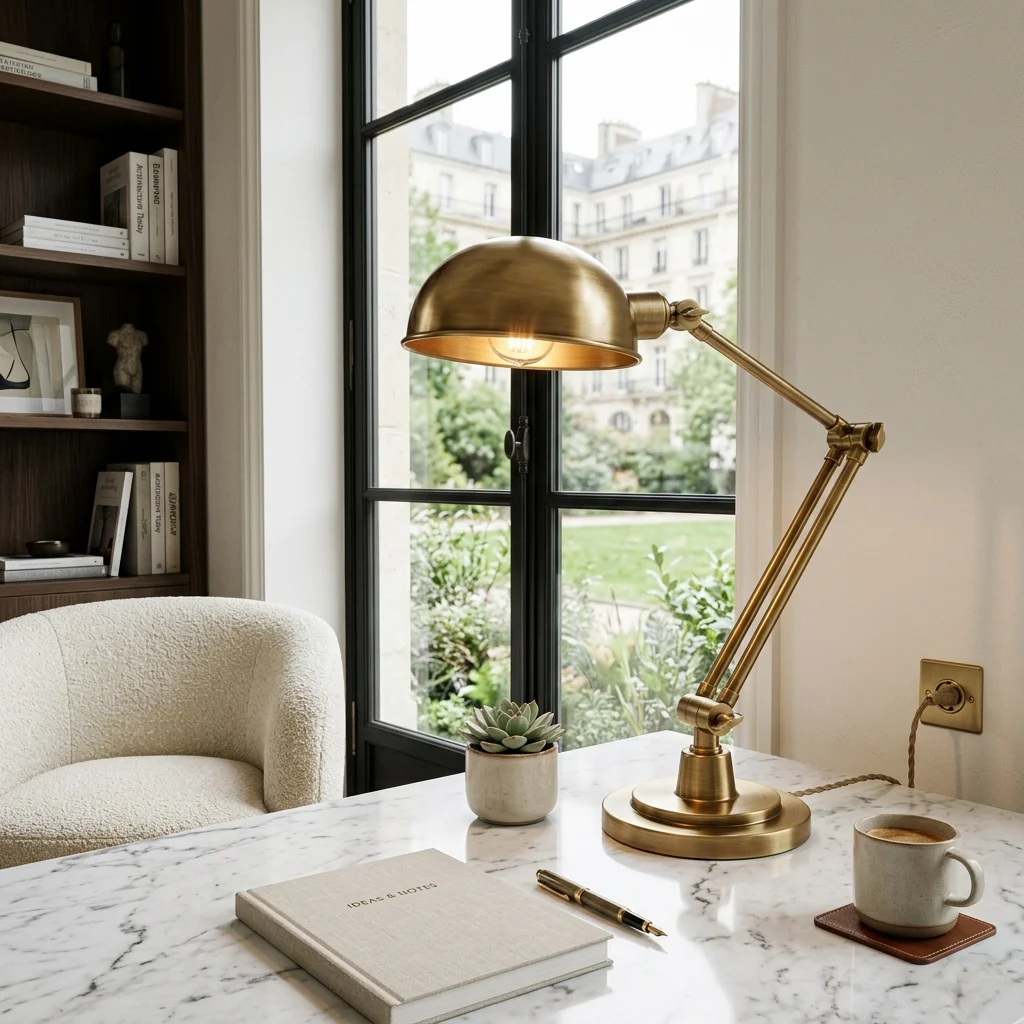
Furniture is one of the most photography-dependent categories on the internet. A buyer is spending $400 to $40,000 on something they can't sit in, can't feel, and won't see in person until it arrives. The product images aren't supporting the sale — they are the sale. Wayfair, West Elm, CB2, Article, Burrow — all of them spend millions per year on photography because each additional dollar of imagery quality returns several dollars in conversion lift.
Yet furniture photography is also the most logistically painful category to shoot traditionally. The pieces are large. They need physical staging in real rooms. They require styling — pillows, throws, rugs, decor, art on the walls. A serious sofa shoot is a week-long location booking with a set designer, a lighting team, and a stylist. For mid-size and emerging furniture brands, this is prohibitively expensive at the seasonal cadence the category demands. The worked furniture example in our AI product photography ROI calculator shows how room sets, angles, finish variants, and refresh cycles change that business case.
AI product photography
Want a practical recommendation for your product?
Share the product, sales channel, deliverables, and timing. Pixelense will recommend the clearest scope without changing the published starting rates.
AI-assisted production can reduce location booking, temporary set construction, and the need to ship furniture for every scene variation. It still requires accurate product references, styling direction, selection, retouching, and review of dimensions, finish, joinery, fabric, and scale.
Why Furniture Adapts So Well to AI
Three reasons furniture is among the highest-leverage AI photography categories:
- 3D models often already exist. Most contemporary furniture brands have 3D CAD files for manufacturing. These convert directly into AI reference assets, locking the silhouette and proportion exactly. Brands without 3D files use clean phone references — also fine.
- The shot list is environment-driven. A sofa in a Brooklyn loft, a Provence farmhouse, a Tokyo apartment, a Palm Springs mid-century home. Same sofa, four different scenes. AI generates this environmental variation at near-zero marginal cost. A traditional studio cannot.
- Configurable SKUs explode imagery volume. A single sofa with 12 fabric options and 3 leg finishes needs 36 images. Multiply across the catalog and you reach hundreds. This is where AI photography pays for itself before you even count the location budget you saved.
The Eight Imagery Types Furniture Brands Need
Across sofas, beds, dining tables, lighting, and decor, the imagery library that converts looks like this:
- Hero in primary room scene — the PDP main image. Sofa in a styled living room, dining table in a sun-lit dining room, etc.
- Clean cutout on white — Wayfair-style isolated product for catalog grids and comparison shopping.
- Detail macro — the leather stitch, the wood joinery, the upholstery weave, the hardware. Closes the "is this actually quality?" gap.
- Multiple room aesthetics — same sofa in modern minimalist, traditional, mid-century, and Scandi rooms. Lets the buyer self-locate.
- Scale reference — piece with a human silhouette or another familiar object for size context. Critical for online furniture conversion.
- Configuration matrix — every fabric × finish combination shown clearly.
- Seasonal styling — winter throw and warm lamp light vs. summer linen and open windows. Same room, two seasons.
- Editorial campaign moment — wide environmental shot with the piece embedded in a styled story. Use for Meta ads and email hero.
The Pixelense Furniture Workflow
1. Asset capture
Either a 3D model file (preferred — OBJ, FBX, GLB) or 4–6 clean phone references of the piece from straight-on, 45°, profile, top-down, and detail on hardware/joinery.
2. Spatial & environment brief
We work with the brand on the target room aesthetics. Most brands need 3–5 distinct environment moods. Common high-converting choices: Brooklyn loft (exposed brick, industrial windows), warm minimal (Scandi white walls, light wood floors, soft daylight), modern luxe (deep walls, marble surfaces, art on walls), and Mediterranean (terracotta, plaster walls, olive tones).
3. Generation with material accuracy
Material reference is critical for furniture. We anchor wood grain, leather pebble, fabric weave, and metal finish from supplied swatch photos. This is the difference between AI furniture that looks luxe vs. AI furniture that looks Ikea-render.
4. Scene styling
Pillows, throws, books, plants, lamps, rugs, art. This is the layer that converts a furniture render into a furniture photograph. We treat styling as a deliberate creative pass, not an afterthought.
5. Final retouch & delivery
Colour grade aligned to brand palette, dimensional file output (1:1, 4:3, 16:9, 9:16), full resolution for print catalogs if needed.
Where AI Is Better Than a Location Shoot
For furniture, AI doesn't just match traditional photography — it often beats it. Four reasons:
- You can't easily reshoot in winter. Catalogs that need a summer-lit and a winter-cozy version of the same product require two separate location shoots. AI runs both off the same anchored model.
- Configuration variants are catastrophic for traditional shoots. Reupholstering a sofa for each fabric option means scheduling around fabric availability, sample turnaround, and stylist availability. AI handles 36 configs as 36 generations.
- You can show the piece in rooms you don't have access to. The Bushwick loft, the Charleston cottage, the Bali resort. Locations a traditional shoot would require a flight, a permit, and a budget to access.
- Iteration speed — see a draft, decide it needs to be styled differently, see the new draft an hour later. A location shoot is one shot, locked.
Traditional photography is still the right call when the brand needs a particular photographer's authorship or exact physical evidence. AI can support listing variations, ad creative, email, and room-scene exploration, but performance and cost should be measured from the brand's own workflow rather than assumed.
The Configuration-Matrix Case
A medium-size DTC furniture brand we modelled had this catalog: 24 sofas × 8 fabric options × 3 leg finishes = 576 configurations. Their existing approach was photographing two configurations per sofa and using flat fabric swatches in a separate gallery. Conversion was middling. The all-configurations imagery they wanted would have required photographing every variant — physically impossible at studio rates.
With AI, the entire 576-image matrix becomes a 2-week production run. Each anchored sofa becomes the base for all 24 of its variants. Conversion lift comes from buyers being able to see exactly the configuration they're considering, in a styled room — not a flat swatch. This pattern repeats across furniture, lighting, and modular decor brands.
Frequently Asked Questions
Can AI render fabric texture, leather grain, and wood grain accurately?
Yes — when anchored to a reference photo of the actual material. We routinely deliver imagery where the material reads correctly down to weave-thread level. Generic prompts without a reference produce generic textures; reference-anchored prompts produce specific, accurate ones.
How do you handle complex room scenes with multiple furniture pieces?
We work from a 3D dimensional brief (or a simple floorplan sketch) plus reference photos of each piece. The AI composes the scene with each anchored object in proper spatial relationship, with scene-appropriate lighting and decor styling.
Will my furniture look like a render or like real photography?
A strong workflow can create a photographic room scene, but the final asset should be checked for dimensions, joinery, material, fabric, finish, hardware, and product scale. Verified photography or 3D assets remain important when exact construction is central to the sale.
What about made-to-order or custom pieces with fabric/finish options?
This is AI photography's biggest win for furniture brands. A single anchored model becomes the base for an entire fabric/finish matrix — 10 leather colours × 4 wood stains × 3 metal finishes = 120 imagery variants without a single additional photo shoot.
AI product photography
Request a project-fit review for your next image set.
Share the product, sales channel, deliverables, and timing. Pixelense will recommend the clearest scope without changing the published starting rates.