
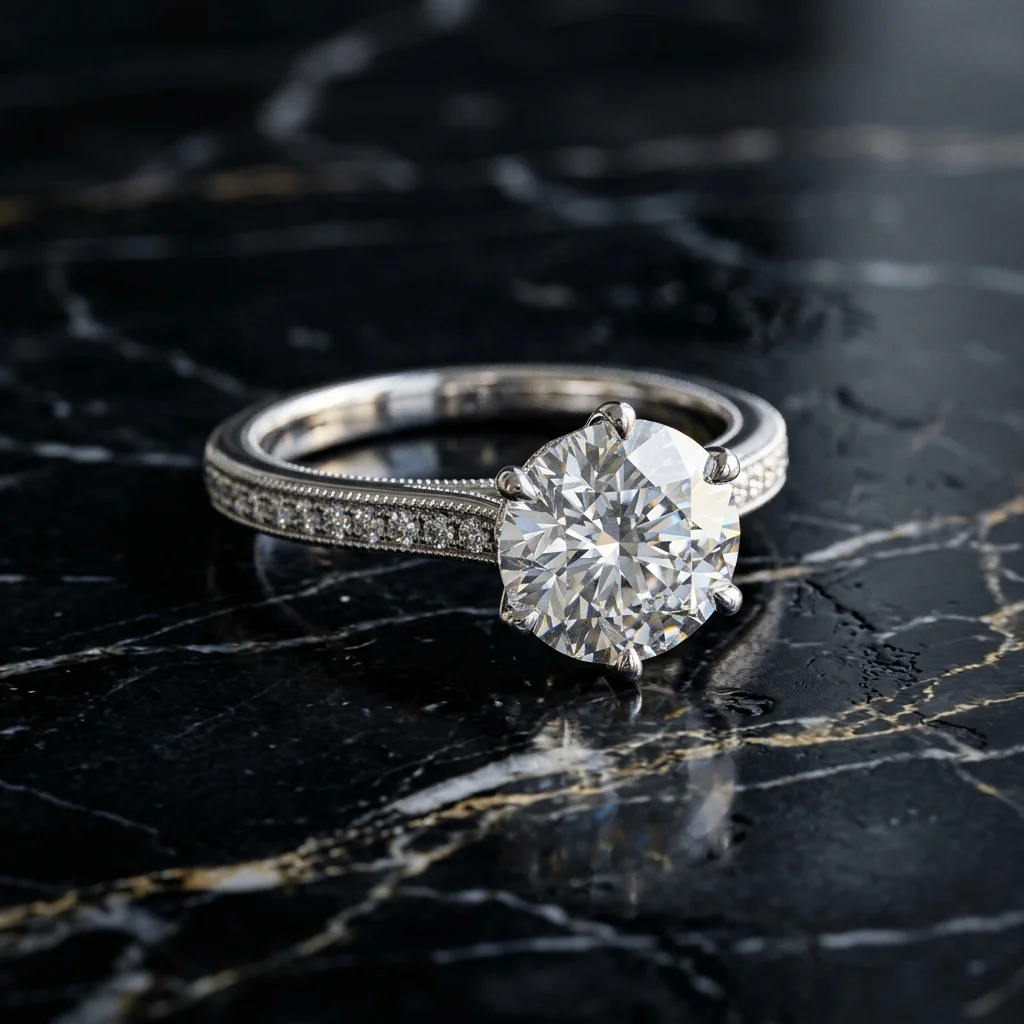
Fine jewelry and luxury watches sit in the most visually demanding corner of e-commerce. The buyer is making a $2,000 to $200,000 decision based almost entirely on what they see on a screen. There's no "good enough." A flat product image kills a luxury sale instantly — but a single hero shot that captures diamond fire, metal warmth, and movement clarity converts at multiples above the category average.
For years, that quality bar meant booking a specialist jewelry photographer at $1,200–$3,000 per day, sending physical inventory across the country (insured, signed-for, often customs-cleared), and waiting six to eight weeks per drop. AI product photography rewrites the math — but only when it's executed with the technical understanding the category demands. This playbook covers exactly what we've learned shooting AI imagery for jewelry and watch brands: what works, what fails, and how to brief a studio so the result rivals — or beats — a traditional shoot.
Fashion product photography
Want a practical recommendation for your product?
Share the product, sales channel, deliverables, and timing. Pixelense will recommend the clearest scope without changing the published starting rates.
Why Jewelry & Watches Are the Hardest Category for AI
Most product categories tolerate a wide range of lighting and composition errors. A skincare bottle on a beige background looks fine even when the highlight roll-off is imperfect. Jewelry doesn't. The category has four technical demands that surface every flaw:
- Specular highlights on polished metal — gold, platinum, and stainless steel reflect almost every light source in the room. The reflection geometry has to be physically plausible or the brain rejects the image as fake.
- Refraction and dispersion in transparent stones — diamonds, sapphires, and emeralds bend light differently. A generic AI render of "a sparkly stone" never matches the actual cut. You need a real reference.
- Micro-detail in settings — prong work, bezel rims, channel pavé, and engraved hallmarks must remain crisp. AI models that smooth detail at high zoom destroy luxury cues.
- Watch movement complexity — open-back hero shots show the calibre. Every bridge, jewel, screw, and engraving has to be in the correct position. There's no "close enough" for collectors.
DIY AI apps (Photoroom, Pebblely, Booth) fail every one of these. They were built for skincare bottles and sneakers. Fine jewelry needs a workflow built around real reference photography fed into the AI as anchor data — not text prompts alone.
The Pixelense Workflow for Jewelry Brands
For every fine jewelry or watch project, we follow a five-stage process designed around the technical constraints above. None of these stages are optional — skip one and the result drifts toward "renderish."
1. Reference capture
You don't need a studio photographer, but you do need a clean macro of each piece — phone-quality is sufficient. Shoot the piece from straight-on, at 45°, and overhead, against a neutral background, with natural daylight or a single softbox. We use these as the AI's grounding reference, locking the stone cut, setting geometry, and metal tone.
2. Creative direction brief
The brief defines the aesthetic universe — dark marble vs. warm wood, golden-hour vs. studio strobe, hero vs. lifestyle. For fine jewelry, the four highest-converting moods in our experience are: black gradient backdrop with rim lighting (classic De Beers), travertine or carrara marble with soft directional light (modern luxury), warm hand model with shallow depth-of-field (lifestyle), and editorial campaign with a styled environment (Vogue-style).
3. AI generation with anchored prompts
We generate using reference-conditioned models — the actual piece, not a text approximation. Prompts specify metal alloy (18K yellow gold vs. white gold vs. platinum reads differently to the model), stone characteristics (round brilliant 1.2ct VS1 G-color), and lighting setup. Generic prompts like "sparkly diamond ring" never make the cut.
4. Specular and refraction pass
The hardest stage. We re-render the highlights and stone fire with targeted prompts that focus specifically on the reflective and refractive properties. This is where DIY tools collapse — they treat the stone as a flat texture. Real jewelry photography lives or dies on this pass.
5. Retouch & color grade
Final retouching pulls metal tones into brand alignment (some brands push warm yellow, others ice-cool platinum). We clean any AI artifacts at the prong-meets-stone interface, balance shadows, and deliver in PNG, JPG, and WebP at print resolution.
Watch-Specific Considerations
Watch photography adds a layer of complexity jewelry doesn't have: the movement. Collectors and serious buyers expect open-back shots to display the exact calibre — Valjoux 7750, ETA 2824, in-house manufacture calibres. Getting this wrong is more visible than any other error in the category.
Our approach for watches:
- Provide a sharp open-back reference photo for every reference watch. The AI uses it as the anchor — we don't generate movements from scratch.
- Shoot the case at 12 o'clock dead-centre for the dial hero. Brands have strong opinions on the date window position and crown alignment.
- Include a lume shot if the watch has applied lume — Super-LumiNova, Chromalight, and tritium tubes each glow distinctively, and collectors notice.
- Side profile is critical for any case over 12mm thick. It shows the bezel-to-caseback proportions, lug shape, and crown guard structure.
The Cost Picture vs. Traditional Jewelry Photography
A typical 30-SKU jewelry collection drop at a specialist studio runs $18,000–$35,000 fully loaded. That includes day rate ($1,200–$3,000), assistant, lighting rental, post-production ($45–$120 per image for high-end retouching), and inventory shipping/insurance. Calendar time is six to eight weeks from kickoff to final delivery. We've broken down the full traditional-vs-AI cost picture here.
An AI-assisted workflow can reduce location, set, and repeated variation costs, but timing and budget depend on reference quality, SKU complexity, retouching, and approvals. The more useful comparison is a written quote against the same shot list and accuracy standard. Run your own inputs in our ROI calculator.
Where AI Doesn't Replace Traditional (Yet)
We don't claim AI replaces every jewelry photography use case. Three scenarios still favour a traditional shoot:
- Press kit imagery for a flagship piece — when a single hero image will run in Vogue, Harper's Bazaar, or a Patek Philippe annual report, the cost calculus is different. Spend the day rate.
- Auction house catalog imagery — Christie's and Sotheby's have specific provenance and documentation requirements that benefit from physical photography.
- Custom-piece launch with a high-profile client — bespoke commission imagery often needs traditional editorial direction.
For everything else — e-commerce hero shots, lifestyle campaigns, paid social creative, lookbooks, catalog grids, A+ Content — AI delivers faster, cheaper, and at parity or better quality. The 80/20 of a luxury jewelry brand's annual imagery volume lives in this zone.
Briefing Checklist for Jewelry & Watch Brands
When you send us a brief, the things that matter most:
- Reference photos (phone-quality fine), one per piece, multiple angles
- Brand mood board or visual references (competitor imagery, magazine tear sheets)
- Specific metal alloy and finish (polished vs. brushed vs. hammered)
- Stone specs (carat, cut, clarity, colour) if relevant
- Final use case (Shopify hero, Amazon main, Meta ad, print catalog)
- Output specs (resolution, aspect ratio, file format)
A well-prepared brief turns into a 5–7 day delivery. A vague brief turns into multiple revision rounds. Both are fine — we don't bill by the revision — but specificity saves you time.
Frequently Asked Questions
Can AI capture the sparkle and fire of real diamonds?
Yes — when paired with a real reference photo of the stone, modern AI models reproduce diamond brilliance, scintillation, and fire faithfully. The key is briefing the studio with a sharp reference image plus the cut and carat detail so the AI grounds its rendering in the actual stone, not a generic diamond.
Will the imagery look like a render or like real photography?
A carefully directed and retouched image can achieve a photographic feel, but jewelry requires strict review of stone count, setting geometry, metal tone, reflections, engraving, and scale. Verified photography remains appropriate when exact craftsmanship is the customer's evidence.
How do you handle watch movements and complications?
Watch movements need a separate macro reference shot. We use that as the AI's anchor for the open-back hero shots, preserving exact bridge layouts, escapement details, and rotor engravings. For complications like tourbillons or perpetual calendars, the reference frame matters more than for simple movements.
What deliverables do jewelry brands typically need?
A typical jewelry brief includes: hero shot on dark or marble surface, lifestyle shot (on a model's hand/wrist), 45° detail angle, top-down for catalog grid, scale reference, and a campaign-mood image. Watches add open-back, side profile, and lume shots. We build a 6–10 image deliverable per SKU as the default.
Fashion product photography
Request a project-fit review for your next image set.
Share the product, sales channel, deliverables, and timing. Pixelense will recommend the clearest scope without changing the published starting rates.