
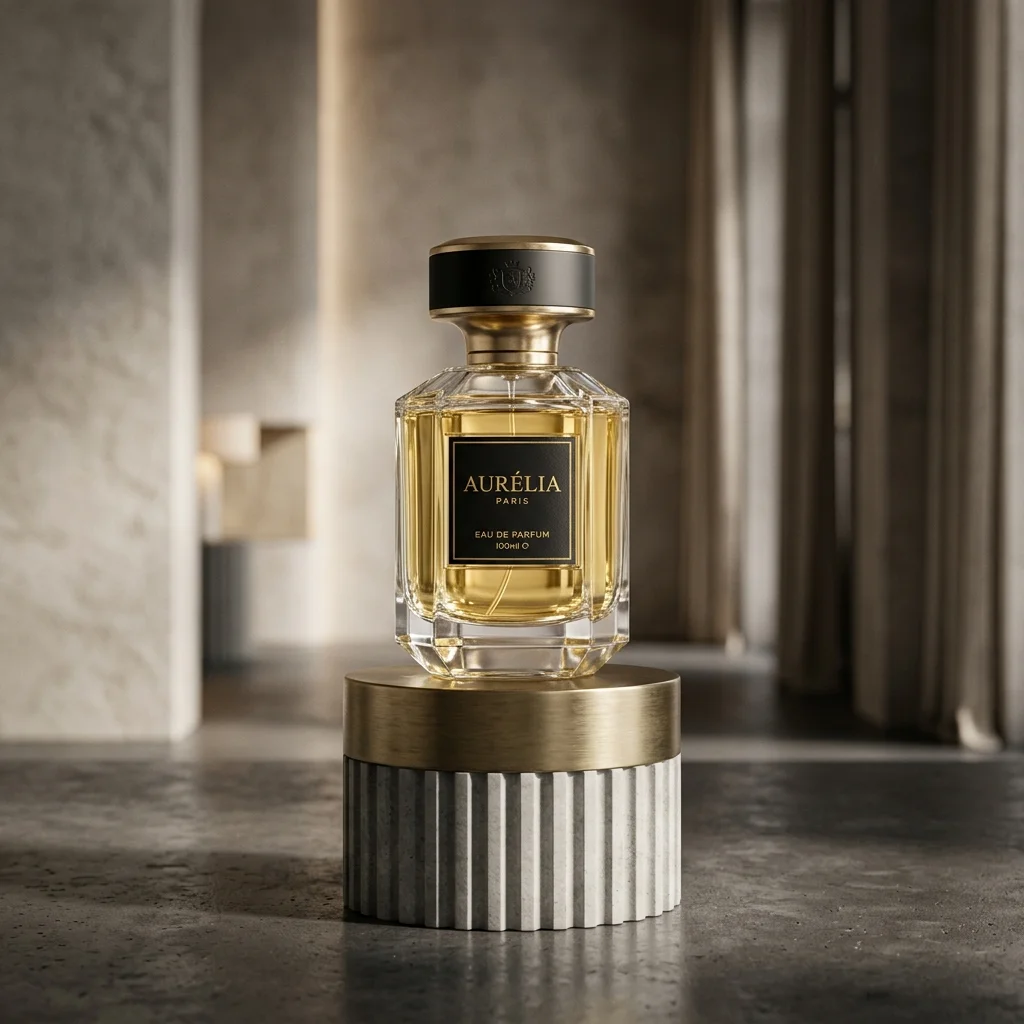
Fragrance is the most cinematic category in beauty. Buyers can't smell the juice on Instagram, so the bottle itself has to carry the entire emotional payload — opulence, danger, longing, freshness, masculinity, intimacy, escape. A great fragrance campaign image is closer to a Vogue editorial than a product shot. A bad one looks like a duty-free shelf snapshot.
Location, talent, set design, glass retouching, and multi-format delivery can make fragrance campaigns complex. Independent brands can use AI-assisted production to explore environments around an approved bottle reference, but the final work still needs careful human review to avoid inventing product details.
Beauty product photography
Want a practical recommendation for your product?
Share the product, sales channel, deliverables, and timing. Pixelense will recommend the clearest scope without changing the published starting rates.
What Makes Fragrance Photography Technically Hard
Four characteristics of fragrance bottles compound into a difficult photographic problem:
- Transparent or tinted glass with juice inside — the bottle's optical properties refract light through the juice, creating a complex internal lighting signature that's specific to that exact bottle and that exact juice colour.
- Metallic or lacquered caps — fragrance caps are sculptural objects in their own right. They have engraved logos, brushed finishes, mirrored surfaces, or cabochon stones. Each of these reflects light differently.
- Bottle silhouette is the brand — Coco Chanel No. 5, Bleu de Chanel, J'adore, Sauvage, Black Opium. The silhouette is recognisable from across a department store. Any distortion in proportion breaks the buyer's recognition.
- The campaign mood is the product — fragrance more than any other category sells the world around the bottle. The lighting, the location, the implied scent of jasmine or vetiver in the air. That mood is what AI photography either nails or completely misses.
The Fragrance AI Photography Workflow
1. Bottle reference capture
Phone-quality, three angles: straight-on front, 45° profile, top-down on cap. Natural daylight near a window, neutral background. We use this as the anchor — the AI doesn't invent the bottle, it places the actual bottle into a new environment.
2. Juice colour calibration
Provide one clean macro of the bottle with juice visible. We extract the precise colour temperature and opacity from that reference. Juice colour matters enormously — pale champagne reads as fresh and floral, deep amber as oriental and woody, clear as aquatic and modern. Get this wrong and the bottle reads as a different fragrance category.
3. Mood selection
We work with brands on the campaign aesthetic universe. For luxury fragrance, our highest-converting moods are: black gradient with single rim light (couture noir), travertine column with directional warm light (Mediterranean), forest moss on stone with mist (woody oriental), velvet-draped pedestal with candlelight (oud and amber), and golden-hour beach with single grain of sand contact (fresh aquatic).
4. Generation and refinement
Multiple variations per mood. We iterate until the bottle proportion, cap geometry, and juice colour all match the reference perfectly while the environment carries the mood. Specular highlights on the glass are the make-or-break detail — they have to fall naturally given the implied light source in the scene.
5. Editorial retouch
Final pass for colour grade, brand-tone alignment, shadow shaping, and resolution delivery. We produce hero, square, and 9:16 vertical for Reels at minimum.
The Six Fragrance Imagery Types
A complete fragrance launch typically needs:
- Hero bottle on premium backdrop — the Sephora and brand-site main image.
- Editorial campaign image — wider scene with the bottle as anchor, magazine-style. Use as Meta ad creative and hero banners.
- Cap detail macro — close-up that conveys craft. Drives the "this is luxury" cue on the PDP scroll.
- Pour or spray motion — a single suspended droplet or a fine mist trail. Romanticises the act of wearing.
- Notes flat-lay — bottle surrounded by the top, heart, and base notes (bergamot, jasmine, sandalwood, oud). Educational and converting.
- 9:16 vertical scene — same campaign mood, vertical aspect for Reels, Stories, and TikTok.
Compare production routes using the same six deliverables, reference requirements, talent needs, revision rounds, and channel exports. AI-assisted production can reduce location and set dependencies for secondary scenes; physical photography remains valuable when glass, liquid, packaging, and scale must be proven exactly.
Fragrance-Specific Pitfalls We've Learned to Avoid
Three failure modes that show up in AI fragrance work when the studio cuts corners:
- The wrong cap geometry. Generic AI tends to over-simplify caps — a square cap becomes vaguely rounded, an engraved logo softens. Reference anchoring fixes this; relying on prompt text alone never does.
- Juice that "floats" inside the bottle. If the AI doesn't handle the meniscus and bottom-of-bottle interaction with the juice, the liquid looks weightless. We specifically prompt for "juice level visible at neck, settled at base, with realistic meniscus."
- Specular highlights that don't match the implied light source. If the scene is candlelit and warm, but the bottle has a cool studio strobe highlight, the brain rejects the image as fake even when the buyer can't articulate why. Lighting consistency is non-negotiable.
These are exactly the technical details that distinguish a human-supervised AI studio from a DIY app workflow. More on the AI-vs-studio breakdown here.
Case Pattern: Indie Fragrance Brand Launching a Capsule
For a three-SKU launch, write the scope before comparing quotes: approved bottle treatment, six image jobs per SKU, campaign moods, copy-safe crops, localisation, retouching, and review rounds. The final Pixelense proposal confirms timing and cost after those inputs are reviewed; no generic budget or performance result is assumed here.
Frequently Asked Questions
Can AI accurately render the colour of perfume juice through frosted glass?
Yes. Juice colour through clear, tinted, and frosted glass is one of the most consistent capabilities in modern AI photography. We anchor each shoot to a reference photo of the actual bottle so the juice colour, opacity, and bottle frost level match the real product exactly.
What about decorative caps and metalwork?
Decorative caps render reliably when we use a reference photo as the anchor. Highly intricate engraved caps need a higher-resolution reference and a dedicated retouch pass to preserve detail.
Can AI generate fragrance ad scenes — beach, garden, candlelit interior?
AI-assisted production can explore those environments around an approved bottle reference without travelling to each location. Human review is still required for bottle geometry, label, cap, glass, liquid colour, reflections, and believable scale.
Do you handle limited-edition or seasonal bottle variants?
Yes — limited editions are where AI photography pays back hardest. A traditional shoot for a holiday-limited bottle that ships in eight weeks is a calendar problem. AI compresses that to a few days, letting brands finalise marketing imagery alongside the bottle production run.
Beauty product photography
Request a project-fit review for your next image set.
Share the product, sales channel, deliverables, and timing. Pixelense will recommend the clearest scope without changing the published starting rates.