
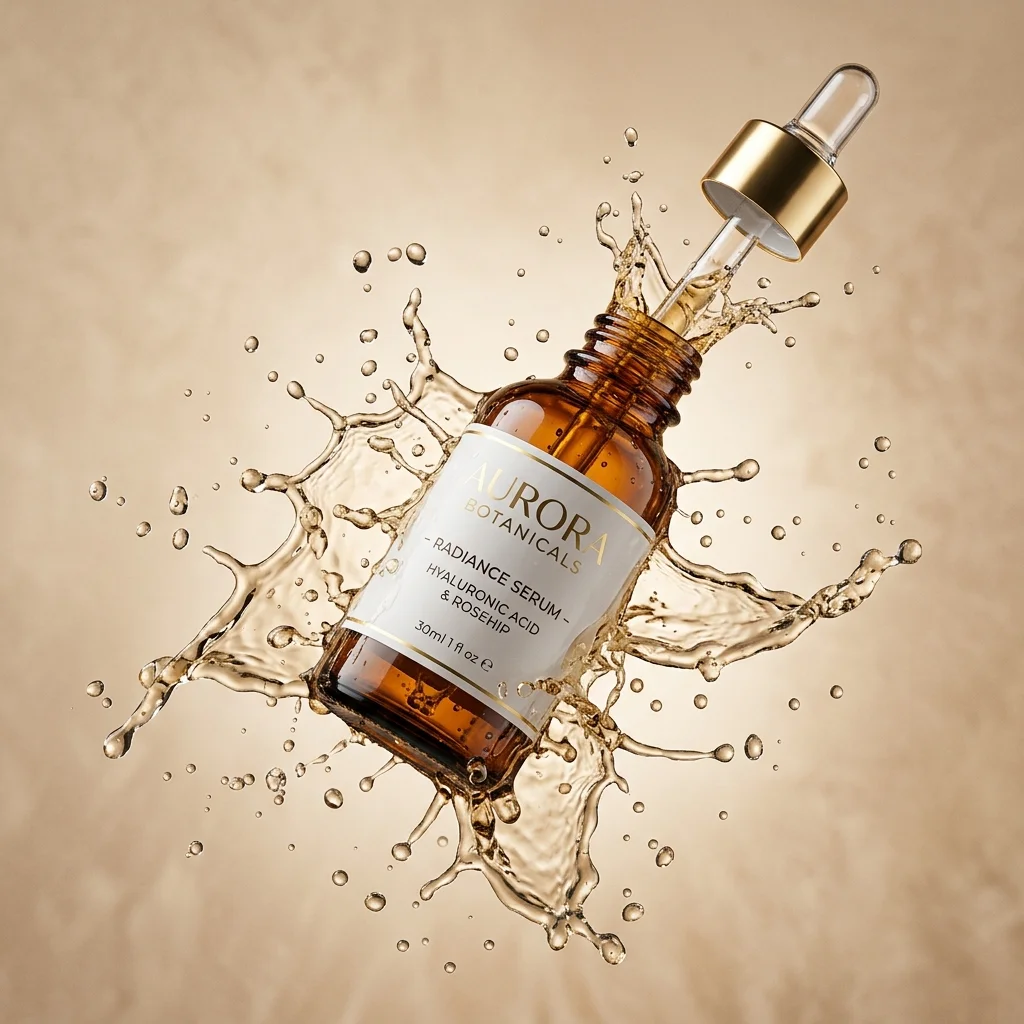
Premium skincare runs on visual trust. The category sells small bottles at $48 to $480 a unit, and almost the entire purchase signal is delivered through the product imagery. Buyers cannot smell the formula, feel the viscosity, or test the absorption on a screen — they decide on cues. A clean glass dropper photographed against a sand-coloured backdrop tells the buyer this is apothecary craft. A flat phone shot tells them this is drugstore.
For skincare brands launching multiple SKUs a year — and most do — traditional beauty photography is a calendar problem and a budget problem. A typical beauty studio day in New York or London runs $4,500–$9,000 fully loaded with art direction, lighting, hand model, food stylist for texture pours, and a retouch pass. Multiply by four seasonal collections and you're spending $36,000+ annually on imagery alone. AI photography rewrites that math for the categories that benefit most from it — and premium skincare is at the top of that list.
Beauty product photography
Want a practical recommendation for your product?
Share the product, sales channel, deliverables, and timing. Pixelense will recommend the clearest scope without changing the published starting rates.
Why Skincare Is an Ideal AI Photography Category
Three structural reasons skincare adapts to AI better than almost any other category:
- The product is repetitive geometry. Bottles, jars, droppers, pumps, and tubes are simple geometric forms that AI renders confidently. Compare this to fashion (drape, fabric movement) or food (steam, melt, freshness) where AI still has rougher edges.
- Brand identity is delivered through environment, not the product. The same amber bottle reads as luxury on travertine and as drugstore on white seamless. AI excels at environment swap — we generate the same product across six brand-mood scenes for the cost of one.
- Volume requirements are high. A skincare brand needs hero, lifestyle, ingredient flat-lay, swatch, before/after lifestyle, and editorial ad — per SKU, per season. AI scales this volume without scaling cost linearly.
The Six Imagery Types Every Premium Skincare Brand Needs
After running shoots across cleansers, serums, moisturisers, sunscreens, and treatment masks, we've converged on a six-image template that covers the full conversion funnel:
1. Hero shot — single product, premium backdrop
The Shopify and Amazon main image. Single product, clean composition, neutral or brand-coloured backdrop (cream, sand, dark forest, charcoal). Soft directional lighting from the side, gentle shadow falloff. This is the image that decides whether the buyer clicks.
2. Texture shot — serum drop or cream swatch
A macro shot of the product texture — a single drop of serum suspended from a glass pipette, a swirl of cream on a marble slab, an oil pour catching the light. This image converts the curious-but-skeptical buyer because it lets them visualize what the product feels like.
3. Ingredient flat-lay
Product surrounded by its hero ingredients — vitamin C with fresh citrus, niacinamide with botanical sprigs, hyaluronic acid with water droplets, retinol with rose hips. This image converts ingredient-driven shoppers who buy on actives.
4. In-hand or on-bathroom-counter lifestyle
The product in a real human context. Hand reaching for the dropper, product on a marble vanity beside a folded linen towel, jar open on a sunlit windowsill. This image converts aspirational buyers — they see themselves using the product.
5. Editorial campaign or seasonal mood
A larger, magazine-style image suitable for paid social and hero banners. Cinematic lighting, deeper environment, longer aspect ratio. This is what your Meta ads need to stop the scroll.
6. Family or routine grouping
Multiple products from your line shot together — the AM/PM routine, the full ritual, the gift set. This image lifts AOV by signalling that products are designed to work together.
Capturing Texture and Viscosity (The Hard Part)
If there's one technical area where AI skincare photography requires careful execution, it's texture. Serum viscosity, cream thickness, oil flow, and foam structure are all category-defining cues. Get them wrong and the product looks like generic stock.
Our approach: every texture shot is anchored to a real reference. We ask the brand for a phone-quality video of the actual product being dispensed — a 5-second clip of the serum dropping from the pipette, the cream being scooped, the oil being poured. We extract motion and viscosity cues from that video and feed them as reference to the AI generation. Result: the texture looks like your formula, not like a generic AI smear.
Brands that skip this step end up with imagery that reads as visually correct but emotionally wrong — buyers can't quite identify why the image feels off, but conversion suffers. Reference-anchored texture is the single highest-leverage choice in skincare AI photography.
Clinical vs. Apothecary vs. Lifestyle Positioning
Premium skincare splits into three visual sub-categories, each with different conversion cues:
Clinical/derm-grade brands (Skinceuticals, Paula's Choice, La Roche-Posay style) convert on clinical white-room aesthetic, glass-and-metal lab cues, sans-serif typography in supporting graphics, and ingredient-forward composition. AI lighting setup: clean broad source, minimal shadow, slightly cool colour temperature.
Apothecary/artisan brands (Aesop, Le Labo, Maison Margiela style) convert on warm wood and stone, hand-lettered or apothecary serif typography, single hero objects on natural surfaces, and an unrushed compositional pacing. AI lighting setup: warm directional, longer shadows, sand/cream/charcoal colour palette.
Lifestyle/wellness brands (Drunk Elephant, Glow Recipe, Youth To The People style) convert on saturated colour, joyful composition, fruit-and-ingredient flat-lays, and clear daylight feel. AI lighting setup: bright daylight, vibrant colour palette, slight depth-of-field play.
The model and prompt framework is identical across all three — what changes is the creative direction. Our prompting guide covers how to translate brand identity into reproducible prompts.
Cost & Speed Compared to Beauty Studio Shoots
A 12-SKU seasonal beauty shoot at a New York studio runs $12,000–$25,000 and 3 weeks calendar time. The same 12 SKUs through Pixelense ships in 5–7 days at a small fraction of the studio cost. For brands launching quarterly drops, this changes what's possible operationally — you can test ad creative on a new SKU, get the data, iterate the formula, and re-shoot, all within a single quarter.
Beyond cost, the strategic value is volume per SKU. Traditional shoots produce 4–6 final assets per product. AI shoots produce 15–25 — across moods, contexts, aspect ratios, and seasons. That asset library powers your ad testing, organic social, email creative, and lifecycle marketing for a year. Run your specific numbers in our ROI calculator.
Frequently Asked Questions
Can AI render glass dropper bottles realistically?
AI can create convincing glass and amber-bottle scenes, but refraction, liquid level, pipette shape, cap construction, reflections, label artwork, and shadows require close human review and retouching against the supplied reference.
How do you show serum or cream texture authentically?
Texture shots need viscosity reference. Send a phone video or a single macro of the actual product texture and we anchor the AI generation to that. Generic prompts produce generic results; reference-anchored prompts produce category-leading results.
Does AI imagery hurt clinical or dermatological credibility?
No — but the styling choices matter more than the medium. Clinical brands convert on clean, neutral backgrounds, ingredient-forward copy, and laboratory-aesthetic context. AI handles all of those better than a generic stock photographer because we tune lighting and surface tone specifically for the brand's positioning.
What about FDA or regulatory imagery requirements?
For cosmetic products, FDA and EU CPNP rules govern label content and claims, not the marketing imagery. Pixelense imagery is used for e-commerce, ads, and editorial — not regulated label submissions. We do flag any client claim copy that wanders into drug territory, but the imagery itself is creative output, not regulated artwork.
Beauty product photography
Request a project-fit review for your next image set.
Share the product, sales channel, deliverables, and timing. Pixelense will recommend the clearest scope without changing the published starting rates.